Gorilla Photography Safari Rwanda – Ultimate Mountain Gorilla Photo Adventure
Gorilla Photography Safari Rwanda offers wildlife photographers an extraordinary opportunity to photograph endangered mountain gorillas in the misty forests of Volcanoes National Park. Set against the dramatic Virunga Mountains of northwestern Rwanda, this experience combines intimate wildlife encounters, rainforest landscapes, professional safari planning and some of the most compelling primate photography opportunities anywhere in Africa.
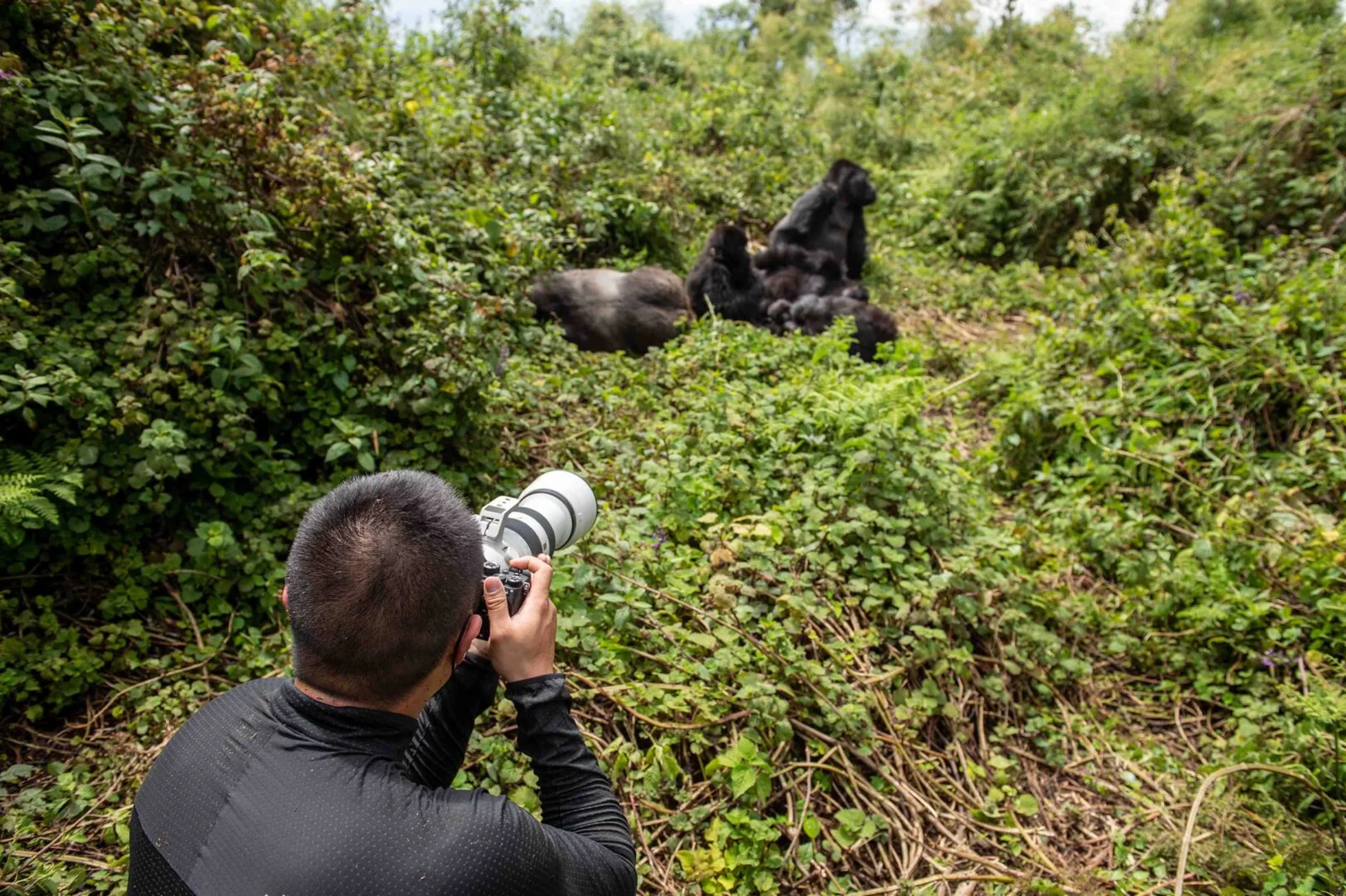
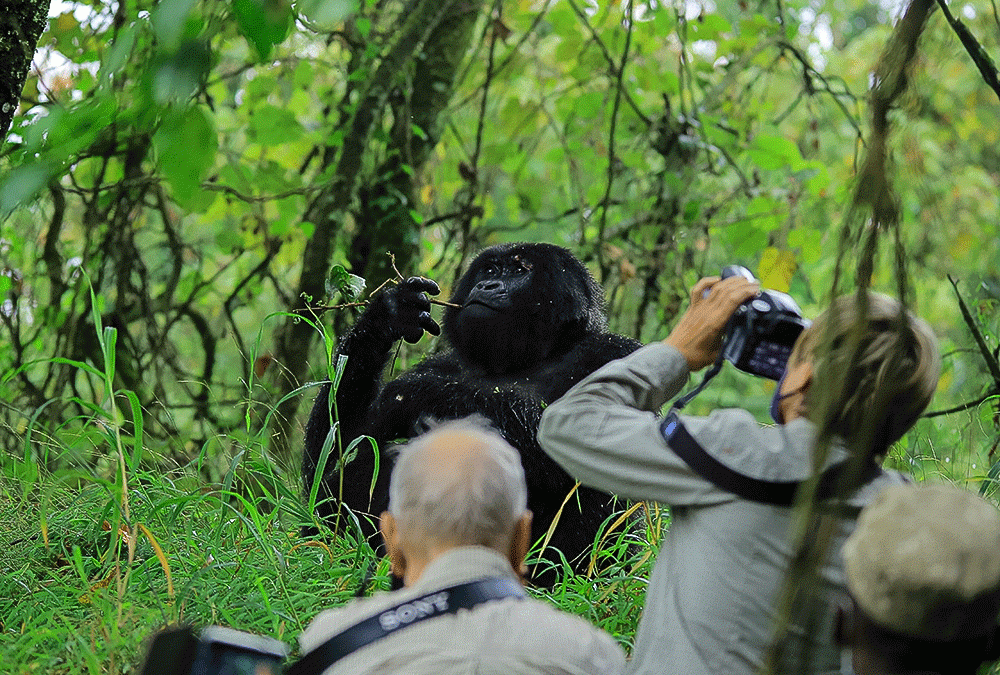
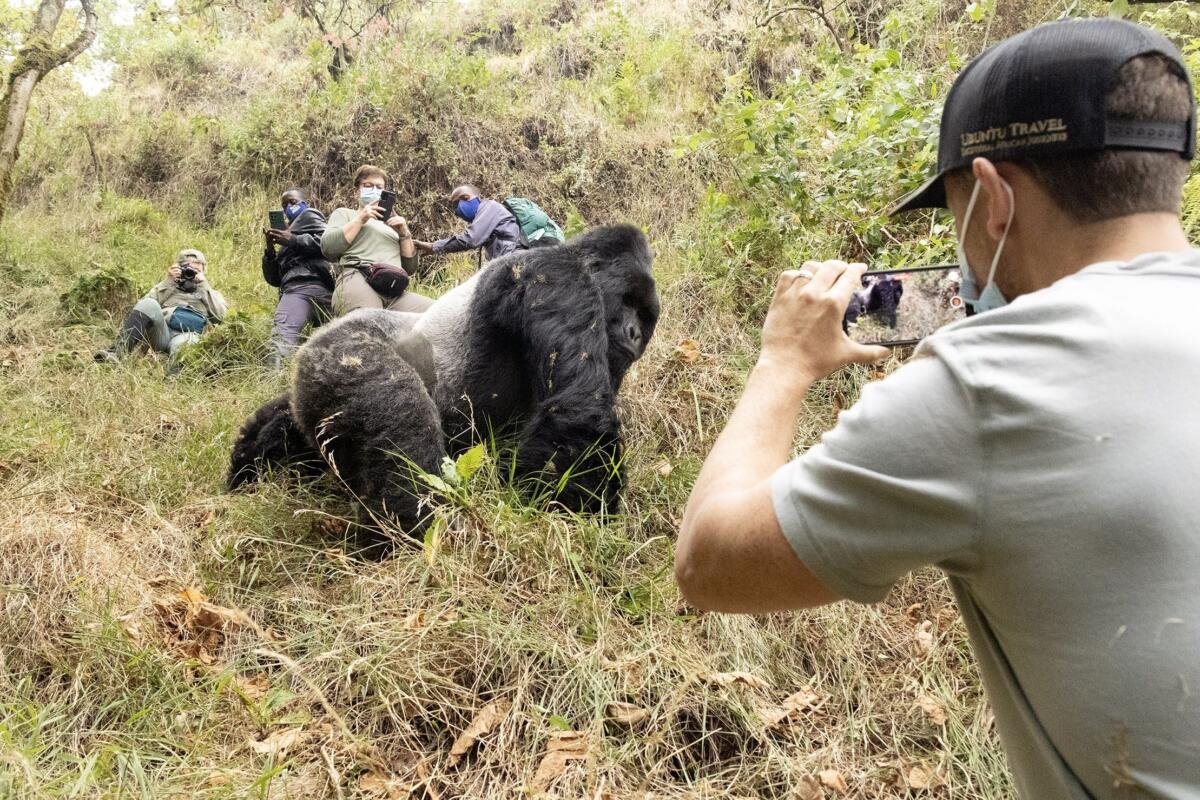
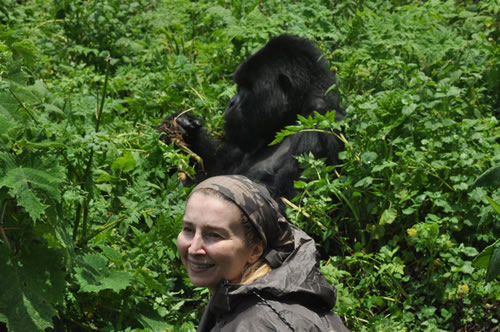
Unlike conventional wildlife photography from a safari vehicle, photographing mountain gorillas places you directly within their forest environment. You walk through bamboo, montane vegetation and dense rainforest before eventually reaching a habituated gorilla family. Once the gorillas are located, photographers must work quickly and thoughtfully, observing changing expressions, family interactions, feeding behaviour, portraits and the relationship between the gorillas and their natural surroundings.
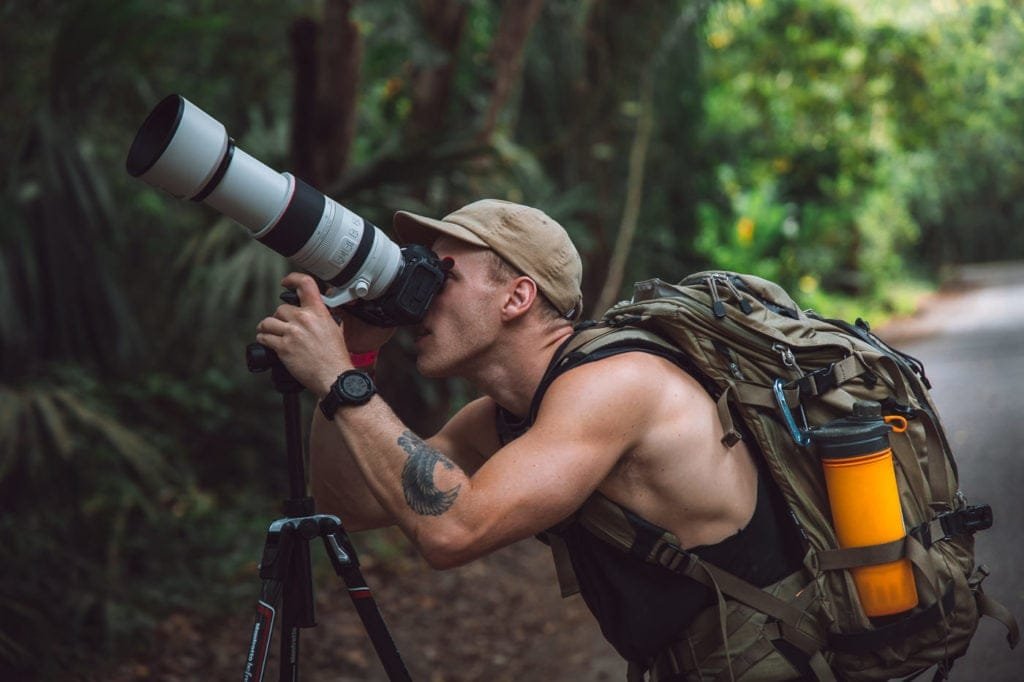
A carefully planned Gorilla Photography Safari Rwanda is therefore about much more than carrying an expensive camera into the forest. Successful photography depends on understanding available light, preparing for changing weather, selecting practical lenses, protecting equipment from moisture, managing camera settings before reaching the gorillas and respecting every instruction given by park guides and rangers.
Rwanda currently charges US$1,500 per person per day for a standard gorilla trekking permit, and the minimum trekking age is 15 years. Visitors gather at the Volcanoes National Park headquarters in Kinigi at around 7:00 a.m. for registration, briefing and allocation before travelling to their trailhead.
Why Choose Rwanda for a Gorilla Photography Safari?
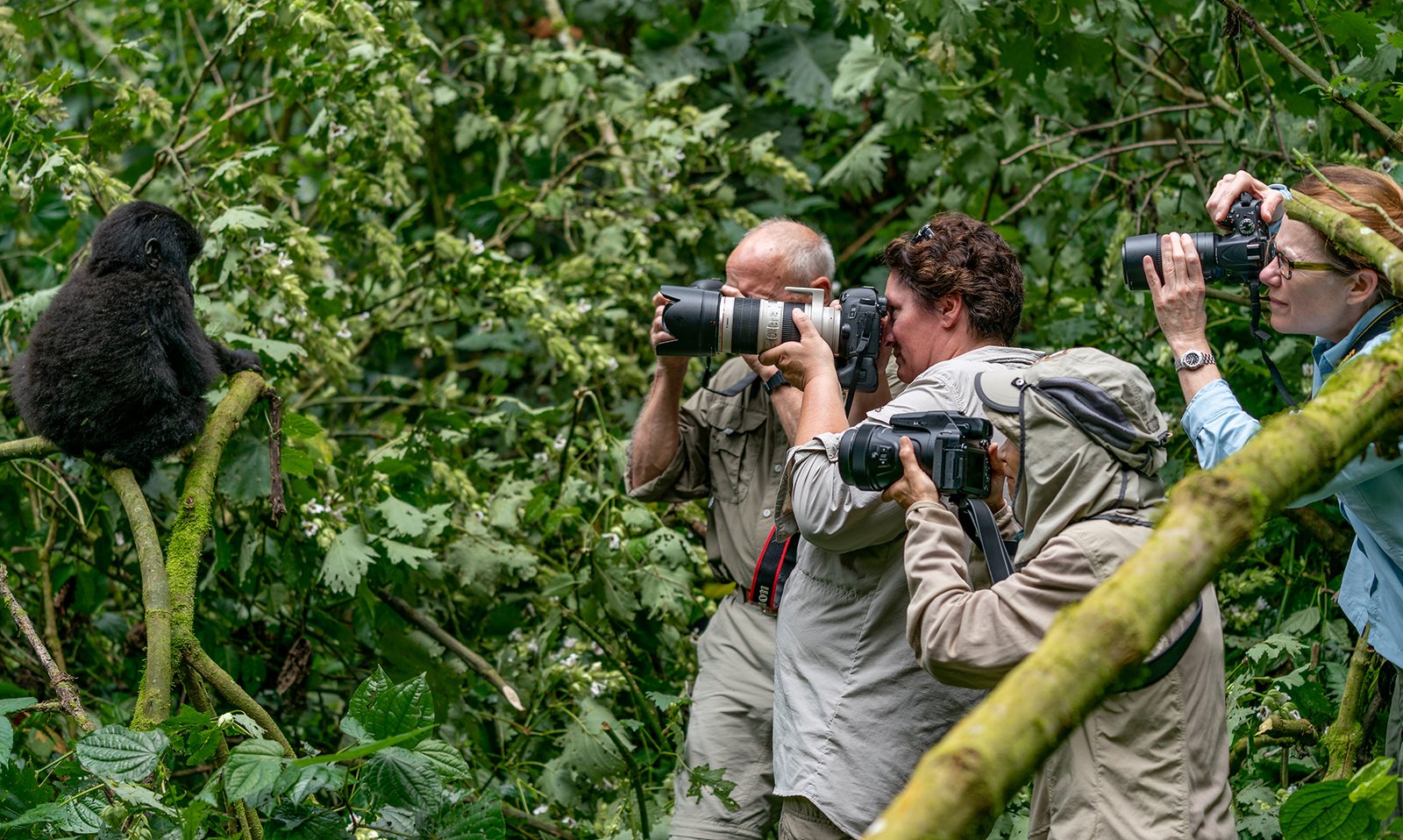
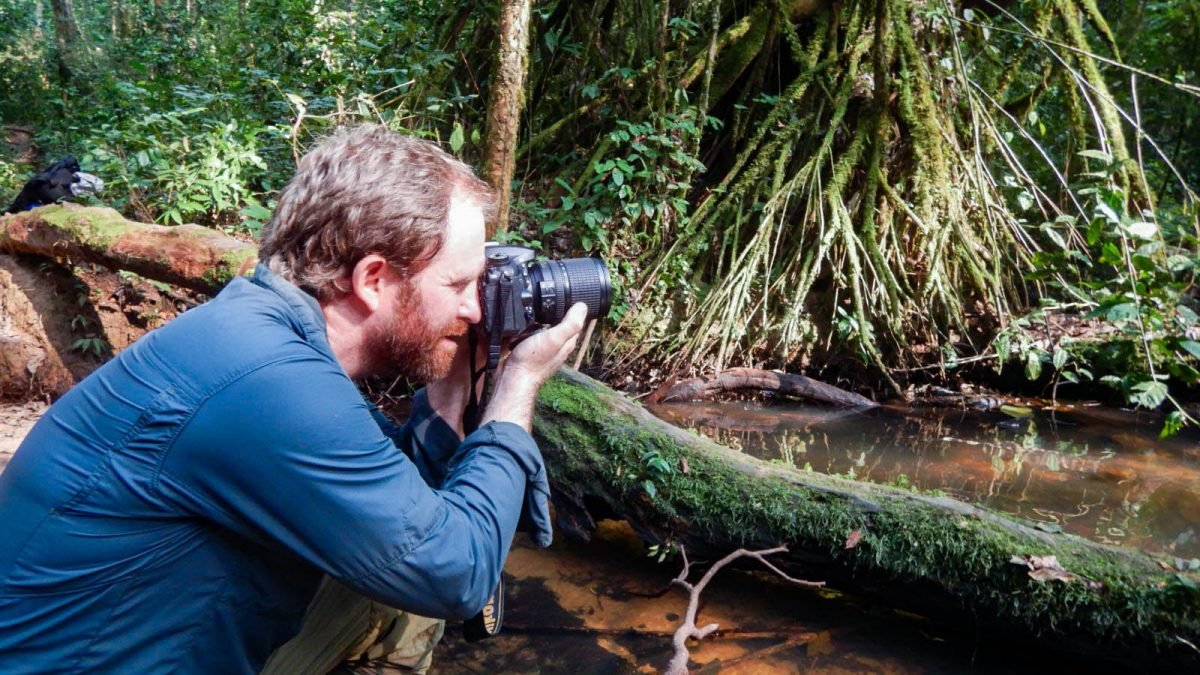
Rwanda has developed a strong reputation as one of Africa’s premier mountain gorilla destinations. Volcanoes National Park lies in the country’s northwest and protects part of the Virunga Massif, a remarkable mountainous ecosystem shared with neighbouring Uganda and the Democratic Republic of Congo.
The park contains evergreen and bamboo forest, grassland, swamp and high-altitude vegetation beneath dramatic volcanic peaks. These changing habitats create beautiful natural backgrounds for photographers who want images that show not only the gorillas but also the environment in which they live.
Another advantage is accessibility. Volcanoes National Park can be reached by road from Kigali, making it possible to combine an international arrival, comfortable accommodation and gorilla trekking without requiring multiple domestic flights.
For photographers carrying valuable camera equipment, this relatively straightforward journey can make logistics easier. Equipment can remain with you in your private safari vehicle, and accommodation around the park can be selected according to the photographer’s preferred level of comfort, accessibility and proximity to the trekking headquarters.
A Gorilla Photography Safari Rwanda can also be expanded beyond gorillas. Golden monkeys, volcanic landscapes, birdlife, local communities, Kigali street scenes and other parts of Rwanda can create a much broader photographic story.
Gorilla Photography in Volcanoes National Park
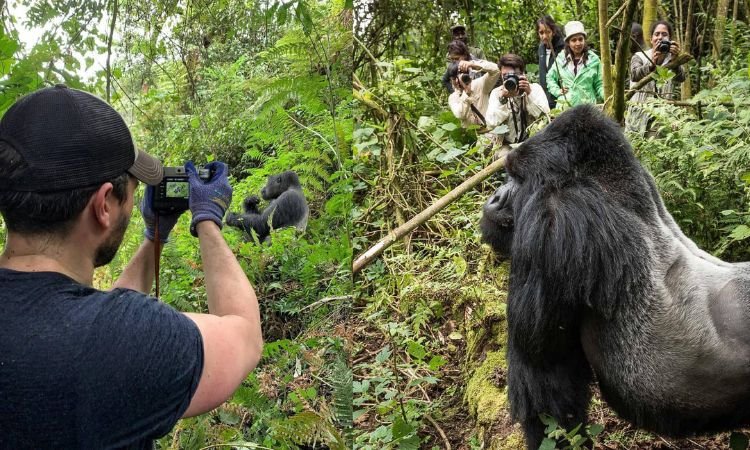
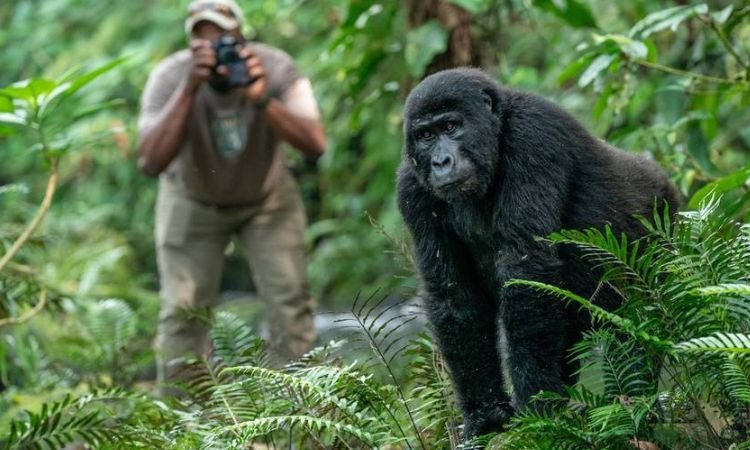
Volcanoes National Park is the central destination for gorilla photography in Rwanda. The park protects the Rwandan slopes of the Virunga Mountains and is home to habituated mountain gorilla families visited under carefully controlled tourism regulations.
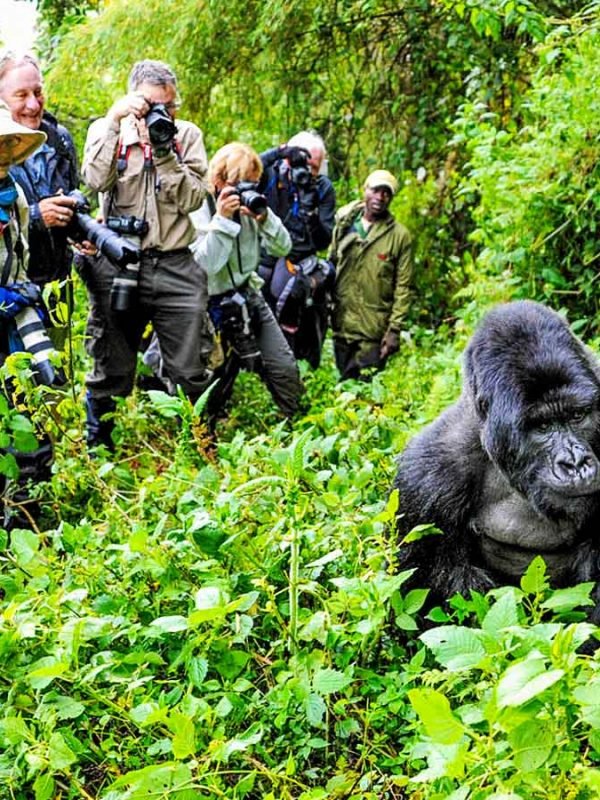
Rwanda’s official tourism information currently lists twelve fully habituated gorilla families. Only a limited number of visitors are allocated to each family, with eight trekking permits issued per habituated troop per day. This limited group size helps keep the encounter intimate and reduces disturbance to the gorillas.
For photographers, the small-group arrangement is particularly valuable. There may still be moments when vegetation, other trekkers or the movements of the gorillas make a perfect angle impossible, but the restricted number of visitors provides a far better environment than photographing wildlife within a large crowd.
The gorillas move freely and are not positioned for photographs. Some may sit among leaves, some may turn away, young gorillas may disappear behind vegetation and a silverback may spend long periods resting. This unpredictability is part of authentic wildlife photography.
Rather than expecting perfectly controlled portraits, photographers should approach the experience as visual storytelling. A silverback partially hidden behind bamboo can sometimes produce a more powerful image than a perfectly unobstructed portrait because the photograph communicates the atmosphere of the forest.
How Long Can You Photograph the Gorillas in Rwanda?
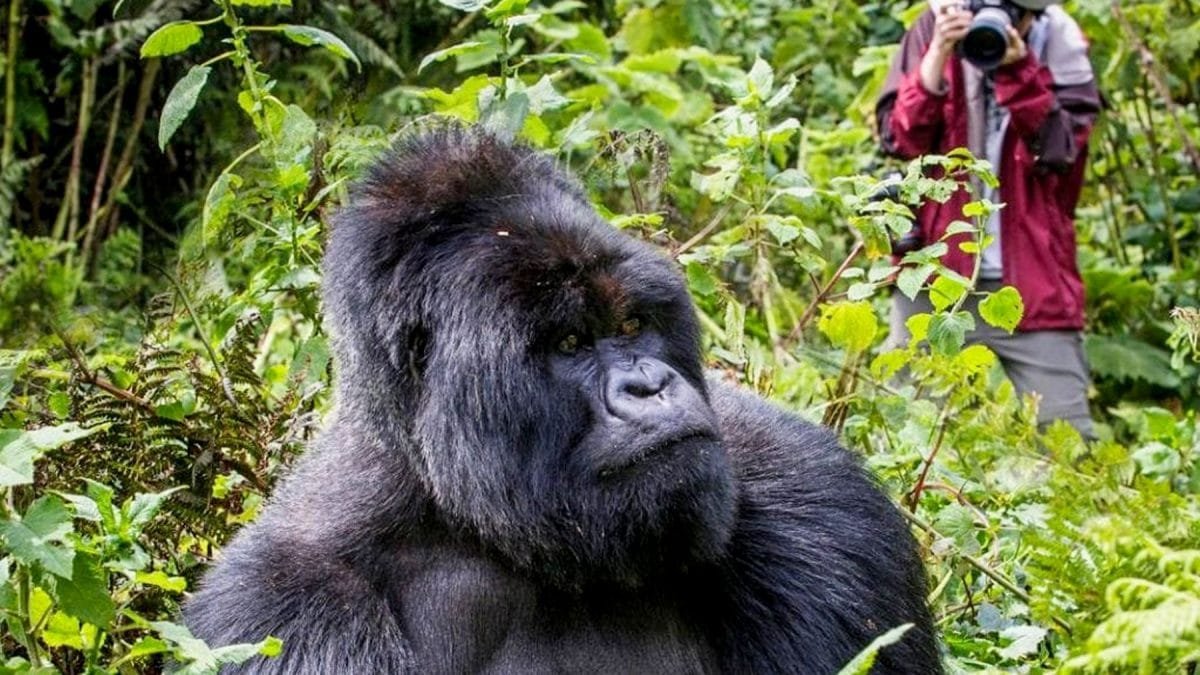
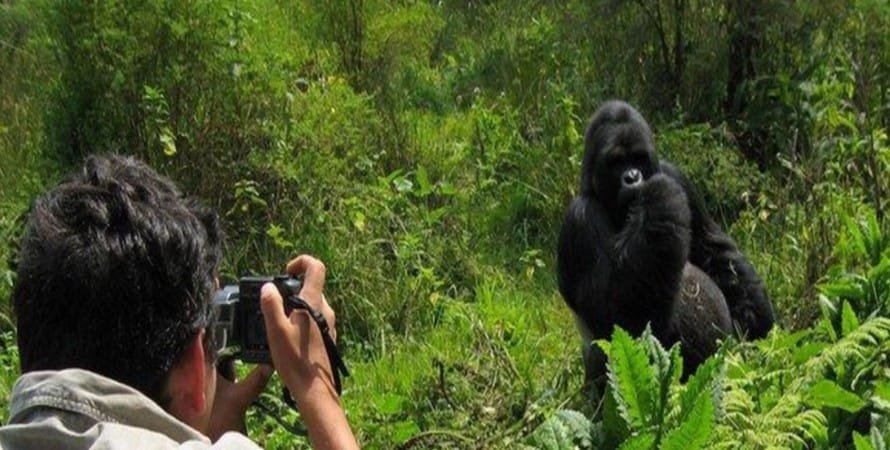
Visitors normally spend a strict maximum of one hour with the gorillas after the family has been located. The trekking time required to reach them is separate and can vary considerably depending on their location. Rwanda’s tourism authority notes that hikes may take approximately 30 minutes to four hours or more and can reach elevations between roughly 2,500 and 4,000 metres.
For ordinary visitors, an hour may seem generous. For a serious wildlife photographer, however, it passes extremely quickly.
This is why preparation matters. Your camera should already be configured before approaching the gorilla family. Batteries should be charged, memory cards should have plenty of space, lenses should be mounted and frequently used settings should be familiar enough that you can change them without spending precious minutes navigating menus.
The objective should not be to take photographs continuously for sixty minutes. Give yourself moments to observe what is happening. Watching the gorillas can help you anticipate interactions and identify the most promising photographic opportunities.
A youngster moving toward its mother, a silverback raising its head, two juveniles beginning to play or a gorilla moving into a shaft of filtered forest light can all become decisive photographic moments.
Best Camera for Gorilla Photography in Rwanda
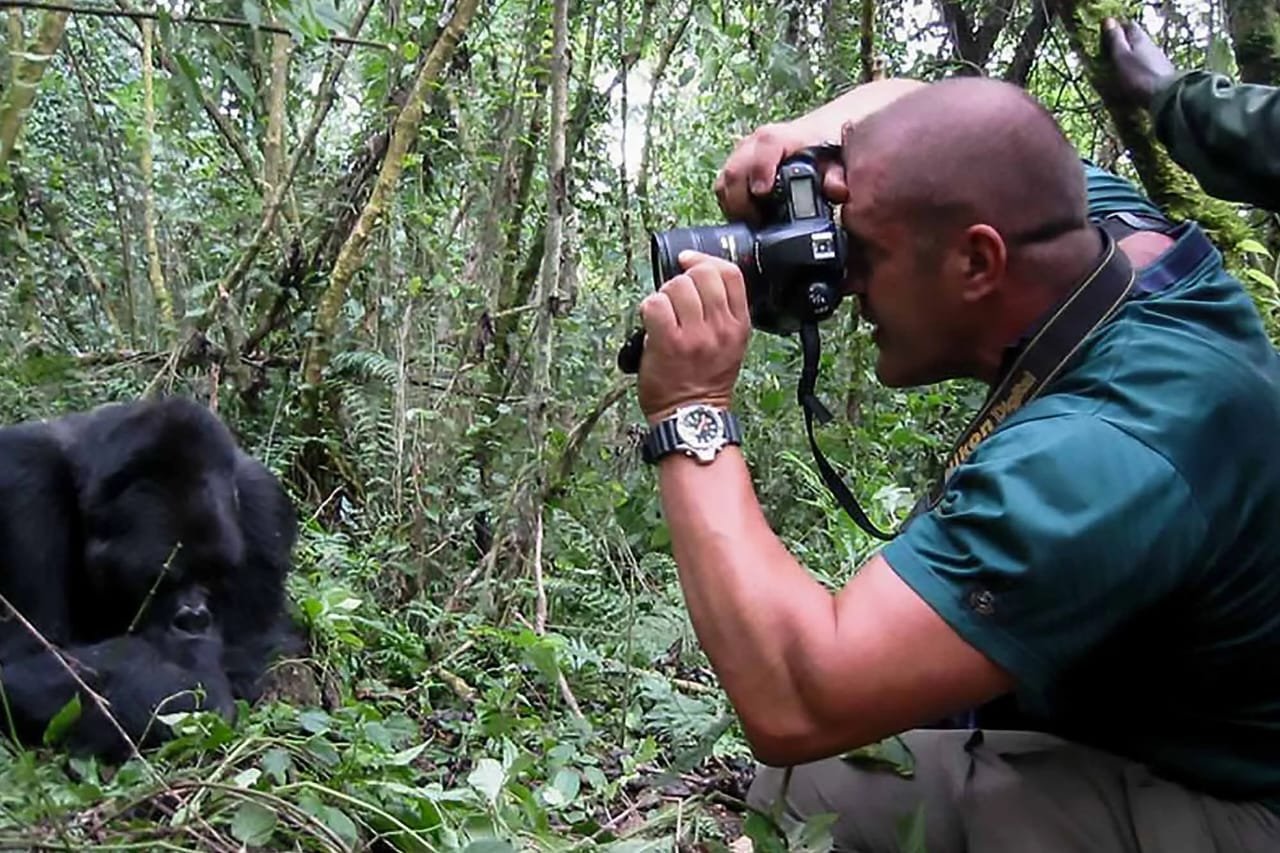
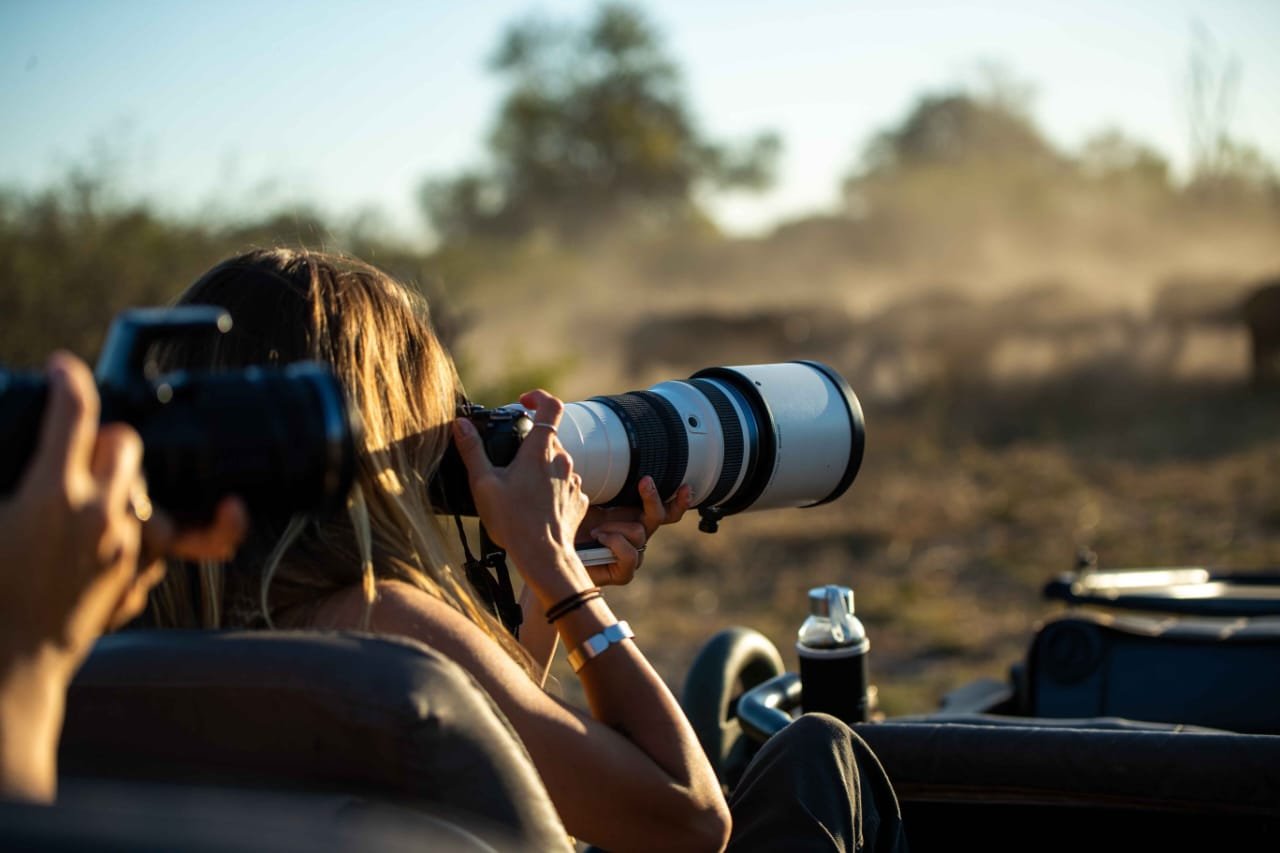
There is no single camera that every photographer must use for a successful Gorilla Photography Safari Rwanda. Modern mirrorless and DSLR systems are both capable of producing excellent images when paired with suitable lenses and used confidently.
Low-light performance is particularly useful because mountain gorillas frequently occupy shaded forest environments where light levels can change rapidly. A camera that handles moderately high ISO values well can therefore be more useful than one chosen purely for extremely high resolution.
Fast and reliable autofocus is another major advantage. Although adult gorillas may remain relatively stationary for periods of time, youngsters can move rapidly and unpredictably. Eye-detection or effective subject-tracking autofocus can help photographers react when behaviour changes suddenly.
Weather sealing can also be useful because Volcanoes National Park is a rainforest environment. Even during relatively dry periods, moisture, mist, mud and unexpected showers remain possible.
However, equipment should never become so complicated or heavy that it interferes with the trek itself. A photographer who understands a familiar camera thoroughly may achieve far stronger images than someone struggling with an unfamiliar professional system.
Best Lens for a Gorilla Photography Safari Rwanda
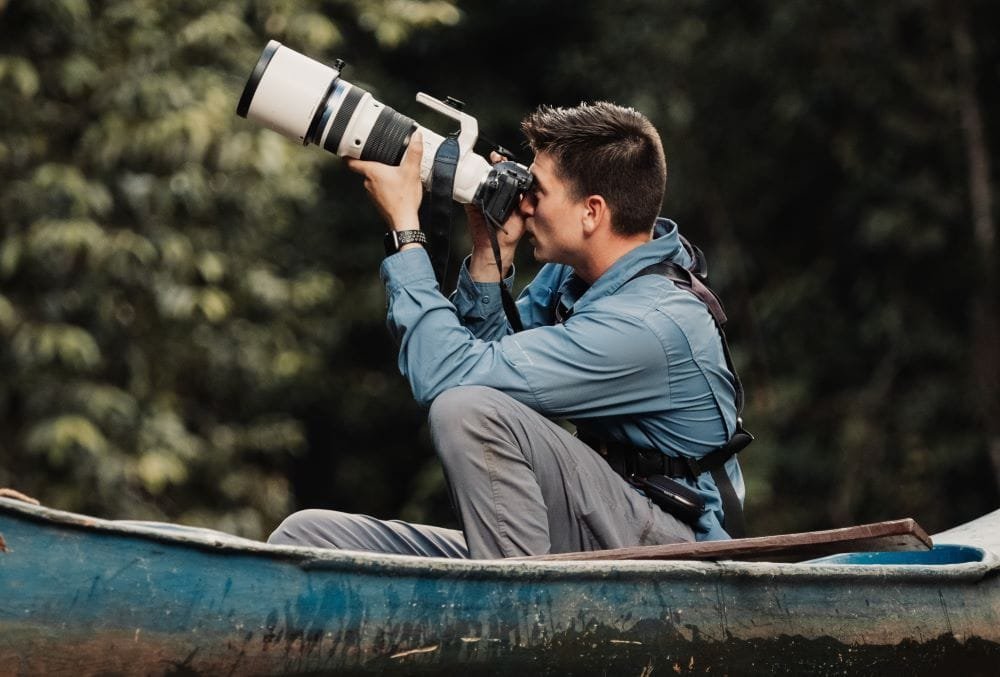
Lens selection is one of the most important decisions when preparing for Gorilla Photography Safari Rwanda
A medium telephoto zoom is often extremely practical because photographers may find themselves relatively close to the gorillas while still needing enough focal length for tightly framed portraits. A lens around the 70–200mm range can provide considerable flexibility for portraits, behavioural images and compositions showing more of the surrounding forest.
A longer zoom reaching approximately 300mm or 400mm can be useful when individual gorillas remain farther away or when a photographer wants detailed portraits without physically moving closer. However, longer lenses can become heavier and may be less convenient when vegetation restricts shooting angles.
A wider zoom can also be valuable. Photographers sometimes concentrate so heavily on filling the frame with a gorilla’s face that they overlook environmental photographs showing an animal surrounded by bamboo, forest vegetation and mist.
Environmental compositions can provide context and often become some of the strongest images from the entire journey.
For photographers carrying two camera bodies, using different focal-length ranges can reduce the need to change lenses in damp or dusty conditions. Those travelling with one body should choose a versatile lens that they can comfortably use throughout the encounter.
Camera Settings for Gorilla Photography in Rwanda
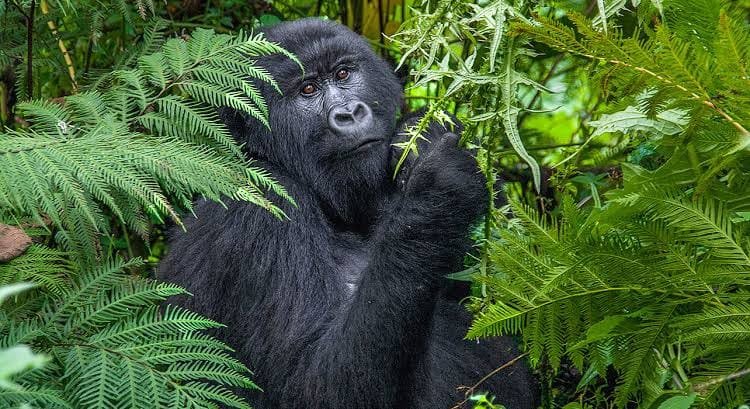
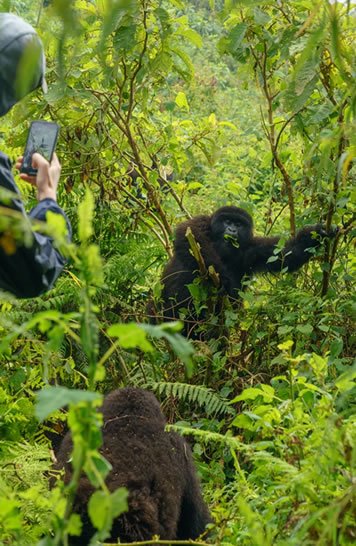
There is no universal combination of aperture, shutter speed and ISO that works throughout the entire encounter because forest light constantly changes.
A useful approach is to prioritise a shutter speed fast enough to protect against movement while allowing the camera to adjust ISO as conditions change. Faster shutter speeds are particularly useful when photographing active juveniles, grooming, climbing or sudden interactions.
For relaxed portraits of relatively stationary gorillas, photographers may sometimes use slower shutter speeds, especially when working with image-stabilised equipment. However, even a resting gorilla can suddenly turn its head or change expression, so photographers should avoid allowing shutter speeds to become unnecessarily slow.
Wide apertures can help in low light while also separating the gorilla from distracting vegetation. However, extremely shallow depth of field must be used carefully. A beautifully sharp eye combined with an excessively blurred face may not always produce the desired result when photographing a large primate at close range.
ISO should be treated as a practical tool rather than something to fear. A sharp, expressive gorilla image at a higher ISO is usually more valuable than a cleaner image ruined by motion blur.
Photographers should review exposure occasionally but avoid spending too much of the encounter examining the back screen. Forest lighting can deceive a camera meter, particularly when dark gorilla fur is surrounded by bright leaves or patches of sky. Exposure compensation may therefore become useful.
Photographing Black Gorilla Fur in Forest Light
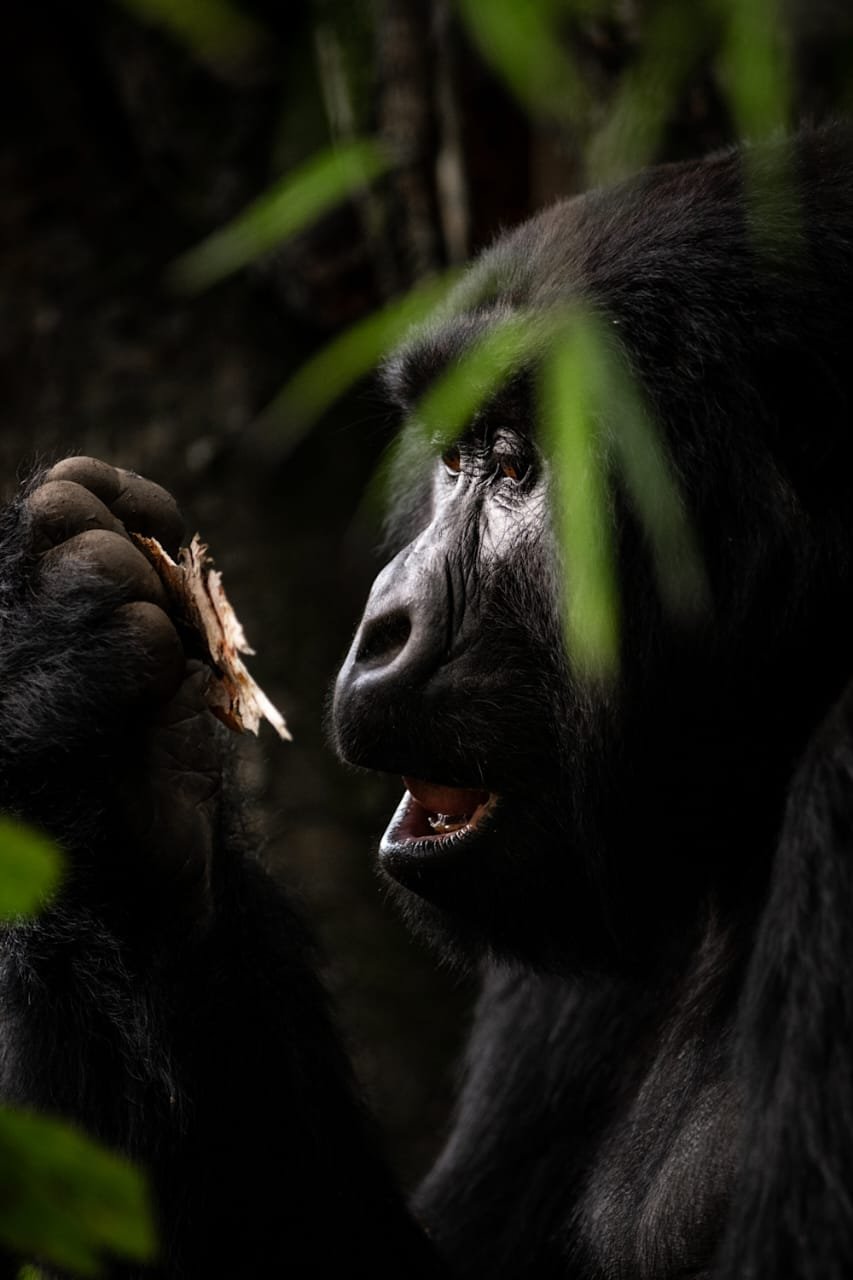
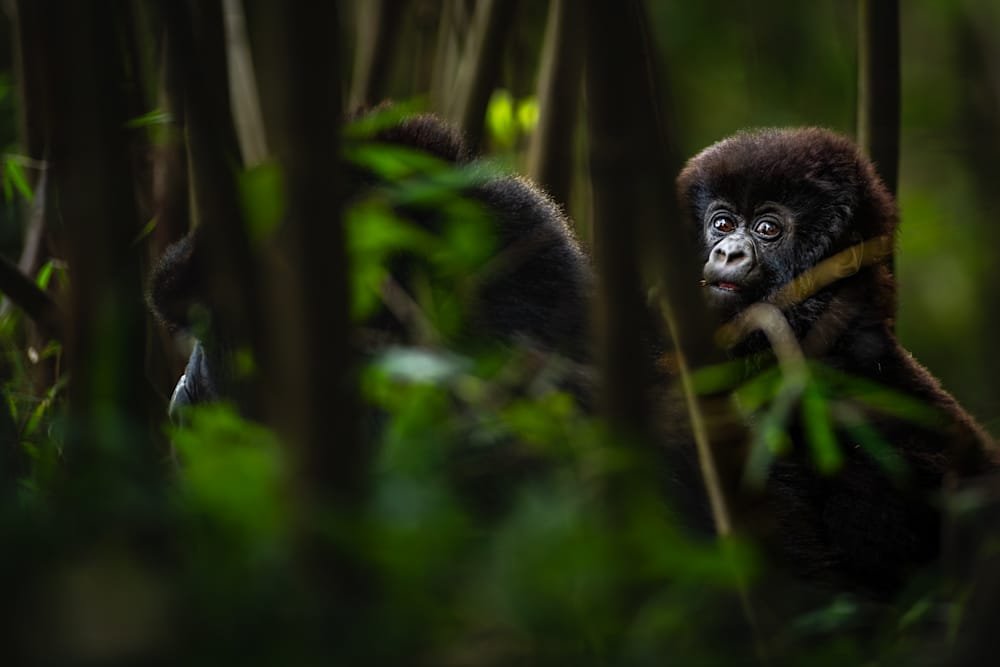
Mountain gorillas present an interesting technical challenge because their dark fur can absorb light while the surrounding vegetation may contain much brighter highlights.
If the camera exposes entirely for the vegetation, important detail in the gorilla’s face and fur can become too dark. If exposure is pushed too aggressively toward the gorilla, bright leaves or gaps in the canopy may lose detail.
Photographers should therefore pay close attention to highlights and adjust exposure as the gorillas move through different lighting conditions.
The direction of light can also completely change an image. Soft, overcast conditions may reveal tremendous detail in dark fur and produce beautifully balanced portraits. Strong shafts of light filtering through the forest can create dramatic contrast but require more careful exposure.
Do not assume that cloudy conditions are disappointing for photography. Soft forest light can actually be extremely flattering for gorilla portraits.
Capturing Gorilla Behaviour Rather Than Only Portraits
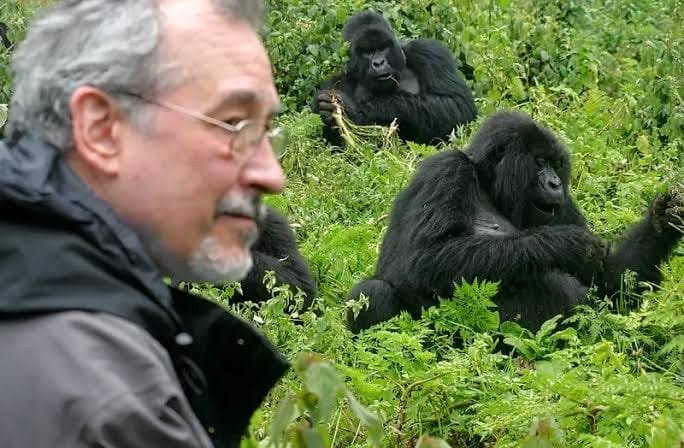
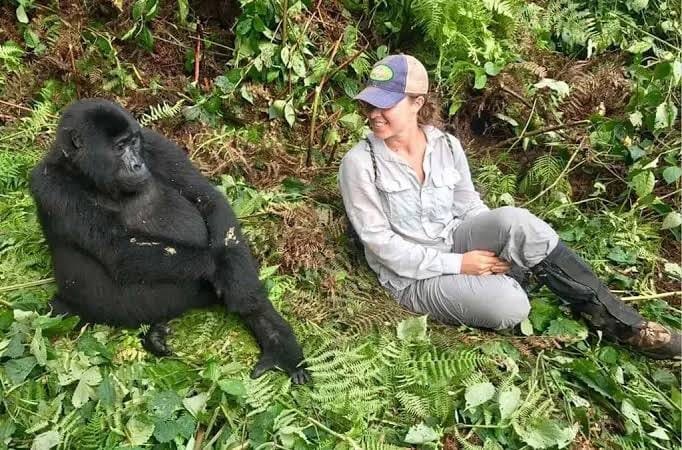
A successful Gorilla Photography Safari Rwanda should tell a story.
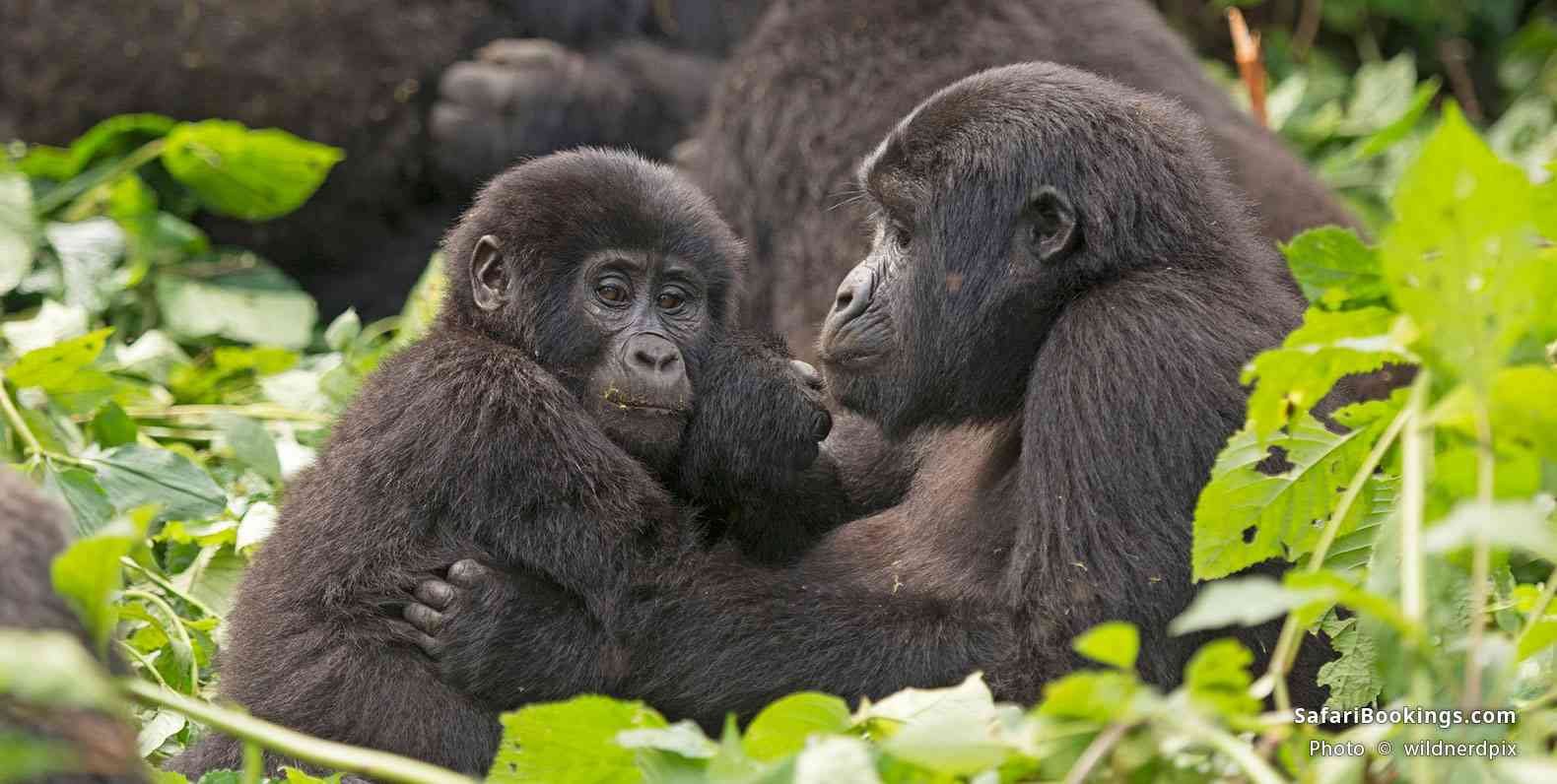
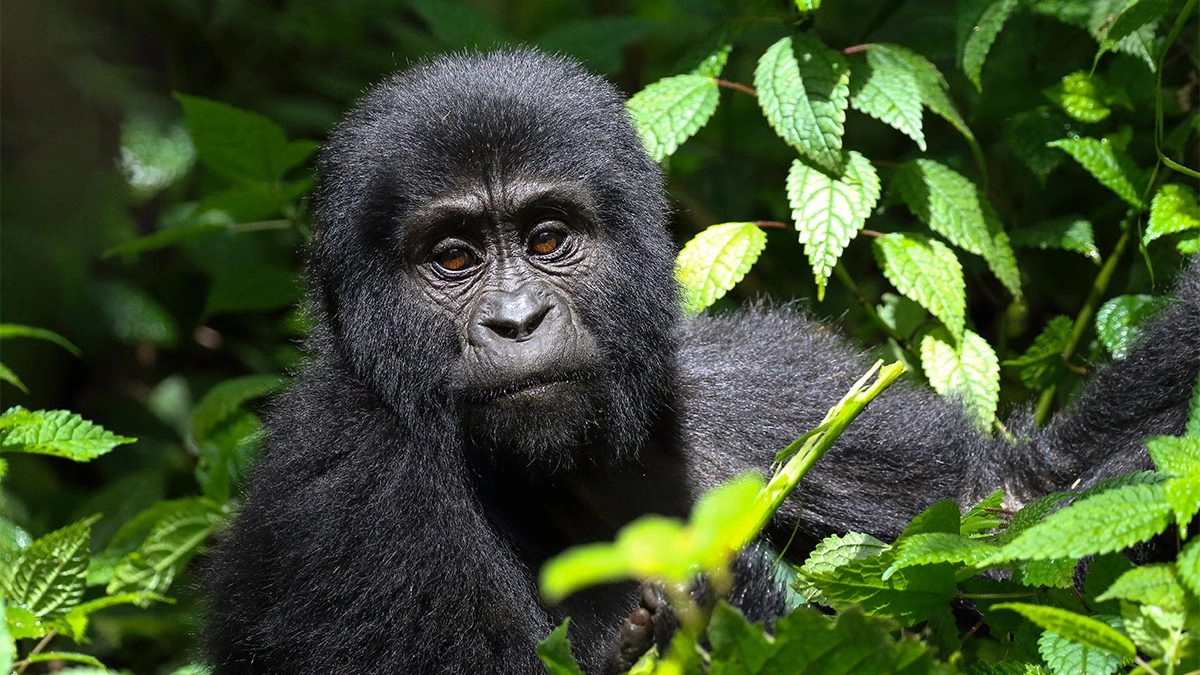
Close portraits of a silverback can be extraordinary, but behaviour often makes a wildlife photograph more memorable. Watch carefully for interactions between mothers and infants, grooming, feeding, juvenile play, resting, climbing and communication within the group.
Expression is equally important. Gorillas have remarkably expressive faces, and subtle changes in gaze, posture or movement can transform an ordinary frame into an emotional photograph.
Patience becomes essential. Rather than constantly repositioning yourself, watch what a particular gorilla is doing and consider what might happen next.
If a young gorilla begins approaching another juvenile, prepare for possible play. If an infant is moving around its mother, anticipate moments of contact. If a silverback raises his head after resting, be ready before changing camera settings.
Wildlife photography rewards anticipation more than frantic reaction.
Gorilla Photography Rules and Responsible Behaviour
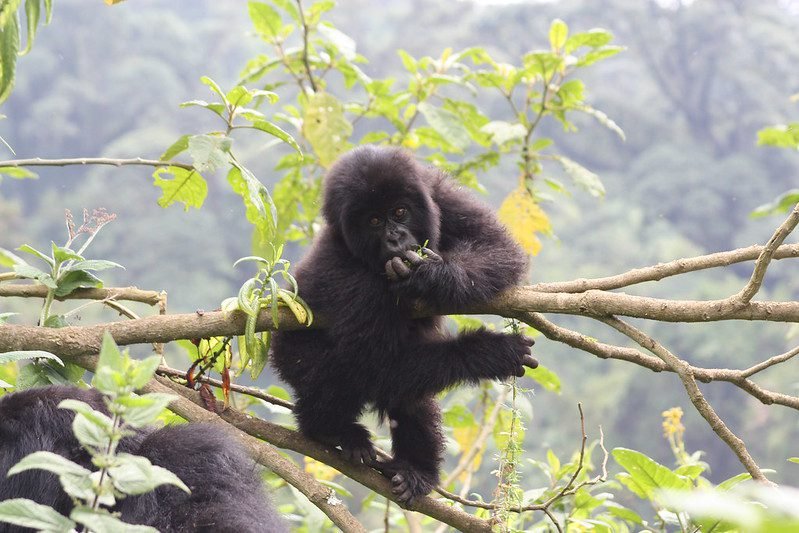
Photography must never take priority over the welfare of mountain gorillas or the instructions of park staff.
Before trekking, visitors receive a briefing at the Volcanoes National Park headquarters explaining how to behave during the encounter. Groups are accompanied by experienced guides and trackers, and visitors should follow their instructions at all times.
Photographers should avoid sudden movements and should never attempt to manipulate a gorilla’s behaviour simply to obtain a better photograph. Branches, vegetation and imperfect angles are part of photographing wild animals in a natural environment.
Flash photography should not be used around the gorillas. Make sure automatic flash settings are disabled before reaching the family, especially if you are using a camera configuration that may activate flash automatically.
Photographers must also remember that the gorilla experience is shared with other visitors. Blocking every shooting angle or repeatedly moving in front of another trekker can affect someone else’s once-in-a-lifetime encounter.
A respectful photographer works quietly, listens carefully and accepts that some moments are meant to be experienced rather than controlled.
Why Multiple Gorilla Treks Are Better for Serious Photographers
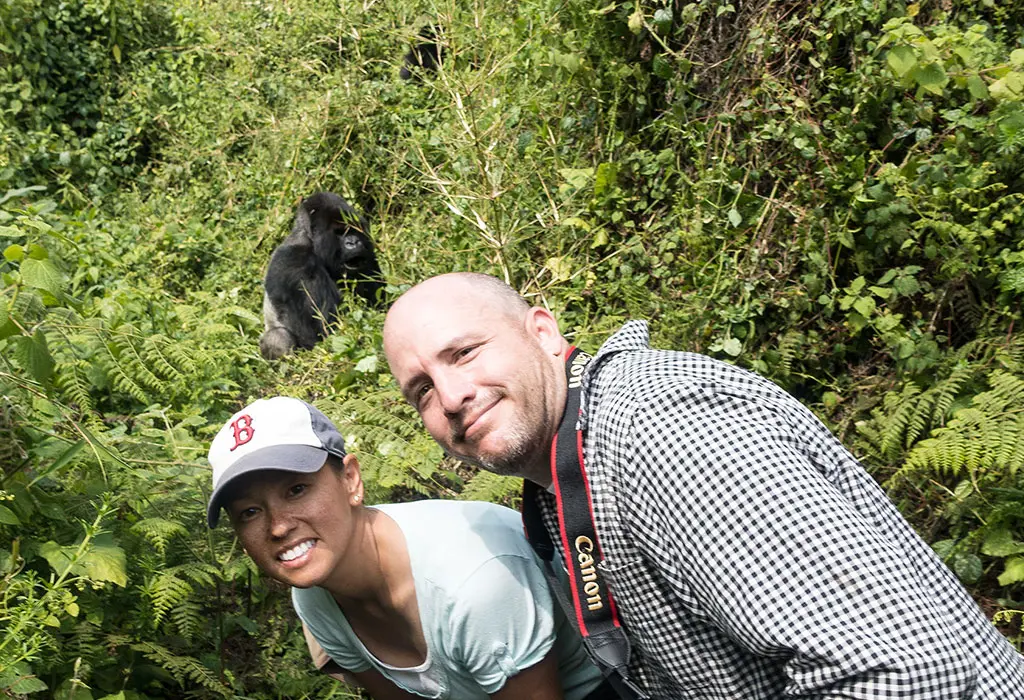
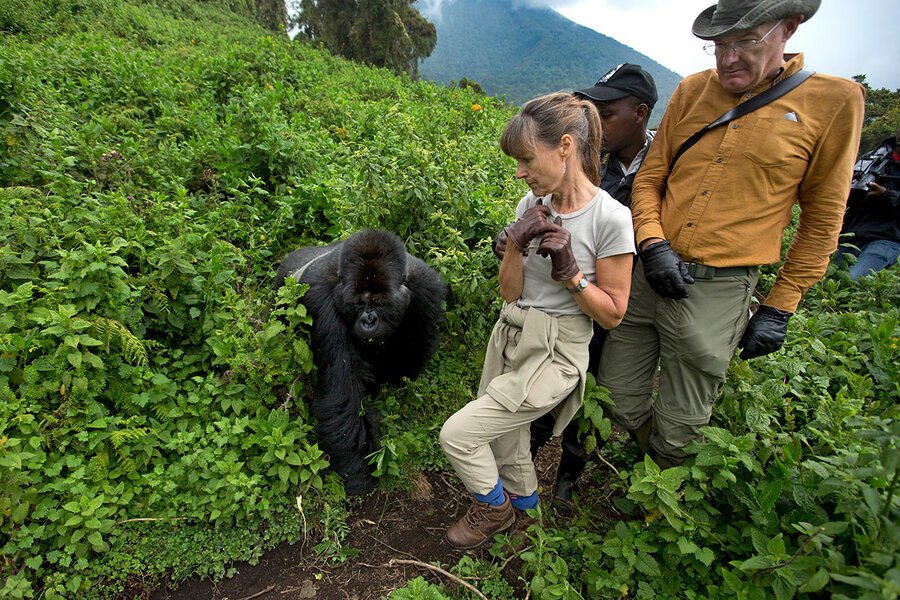
Photographers who are particularly serious about building a diverse gorilla portfolio should consider booking more than one trekking day.
A single encounter can produce extraordinary photographs, but every trek is different. Weather changes, individual gorillas behave differently, family composition varies and the quality and direction of light cannot be predicted.
On one day, a silverback may remain partly concealed by vegetation. On another, the group may be in a more open bamboo area. One trek may provide intimate portraits while another produces outstanding juvenile behaviour.
Multiple treks also reduce the pressure to capture everything during one hour.
After experiencing the first trek, photographers often understand the environment much better. They know how quickly conditions change, which lenses proved most useful and how they want to adjust their camera settings on the following day.
Each trekking day requires its own permit. With the current standard international rate at US$1,500 per person per trek, photographers planning two gorilla encounters should budget for two separate permits.
Best Time for Gorilla Photography in Rwanda
Gorilla trekking is possible throughout the year, which means a Gorilla Photography Safari Rwanda does not have to be limited to one short season.
The drier periods are often attractive to photographers because forest trails may be easier to negotiate and equipment management can be simpler when rainfall is lower. These periods are also popular with international travellers, so advance planning becomes particularly important.
The wetter months should not automatically be dismissed. Rwanda’s forest can become intensely green and atmospheric, while cloud, mist and softer light can create beautiful photographic conditions.
Rain can also produce glistening vegetation and highly atmospheric environmental photographs. The challenge is protecting equipment and remaining comfortable during wetter trekking conditions.
Photographers should therefore choose dates according to both photographic priorities and personal trekking preferences rather than assuming there is one perfect month.
Preparing Camera Equipment for Rainforest Conditions
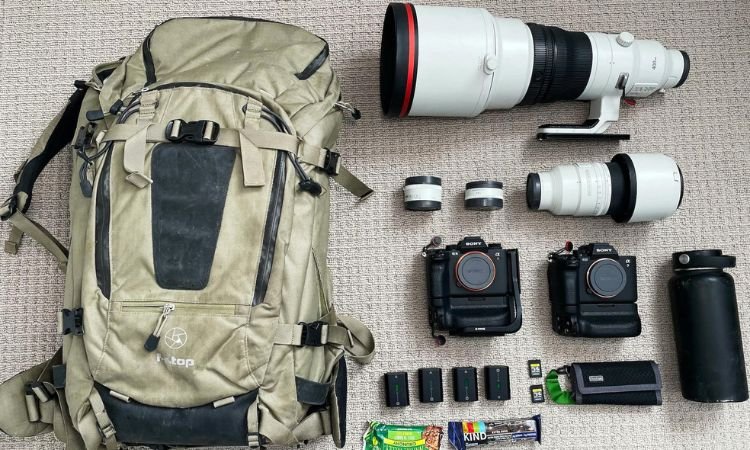
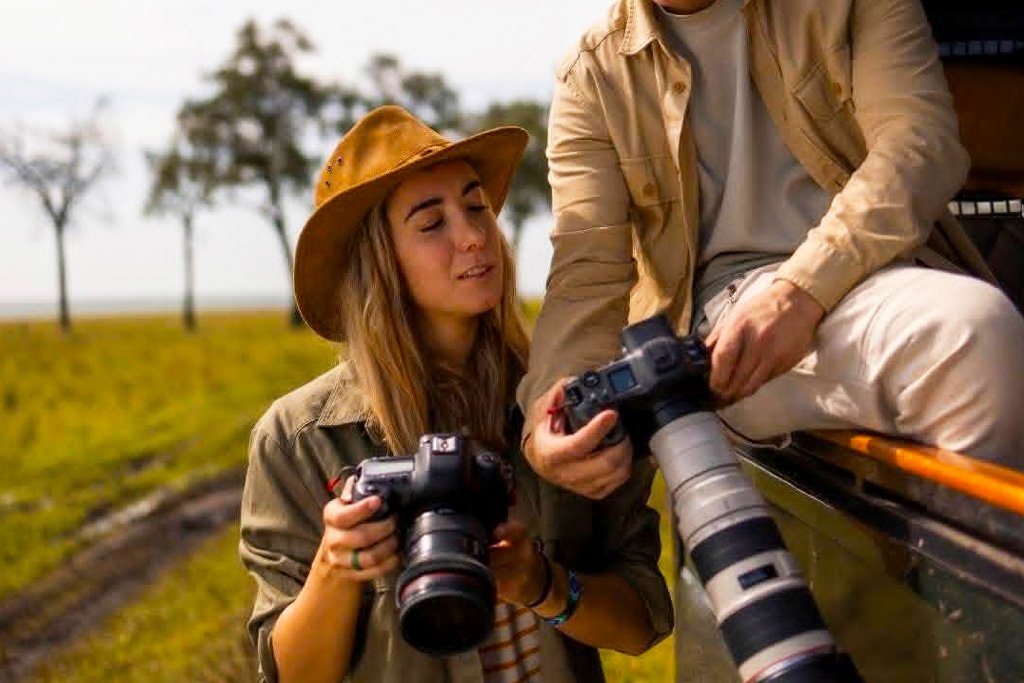
Volcanoes National Park should always be treated as a potentially wet environment.
Even when the weather forecast appears favourable, photographers should protect cameras and lenses against unexpected showers, mist and dripping vegetation. A practical rain cover can be extremely valuable.
Camera bags should also provide reasonable weather protection. Small dry bags or waterproof pouches can protect batteries, memory cards and other sensitive accessories.
Lens cloths should be easily accessible because front elements may become wet or fogged. Carry more than one cloth because a single cloth can quickly become saturated in humid conditions.
Avoid carrying excessive equipment purely because you own it. Every kilogram has to travel with you through the forest.
Rwanda officially notes that porters are available and can help carry backpacks and cameras while also assisting trekkers along the route. Hiring a porter can therefore be particularly valuable for photographers with heavier equipment.
What to Wear During a Gorilla Photography Safari Rwanda
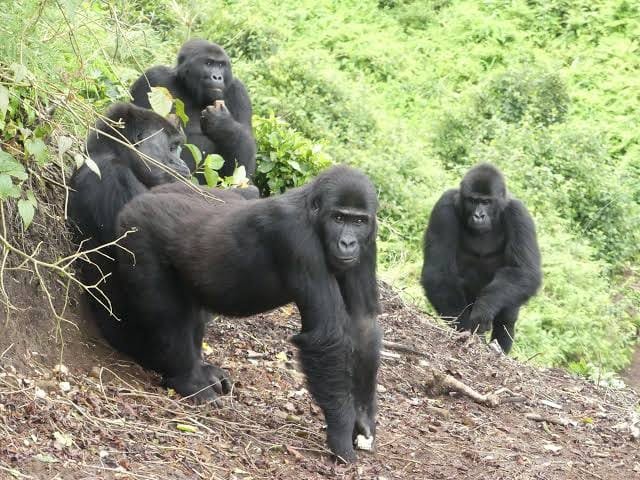
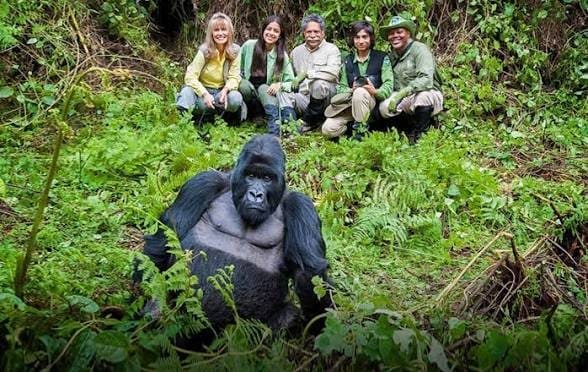
Photographers should dress for trekking rather than for appearance. Rwanda’s official visitor guidance recommends sturdy clothing, solid walking shoes, gaiters and lightweight waterproof protection because trails can involve vegetation, rain and uneven terrain.
Long trousers and long sleeves are useful when moving through dense vegetation. Strong hiking shoes or boots with reliable grip are particularly important because forest trails can become muddy and slippery.
Gloves can be useful when navigating areas with vegetation, while a lightweight waterproof jacket should remain easily accessible rather than packed at the bottom of a camera bag.
Neutral, comfortable clothing generally works best. Photographers should also avoid overloading themselves with unnecessary clothing or accessories that make movement difficult.
Luxury Gorilla Photography Safaris in Rwanda
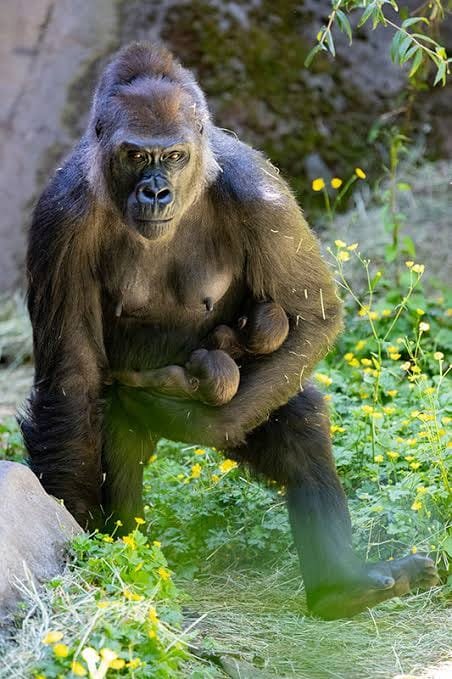
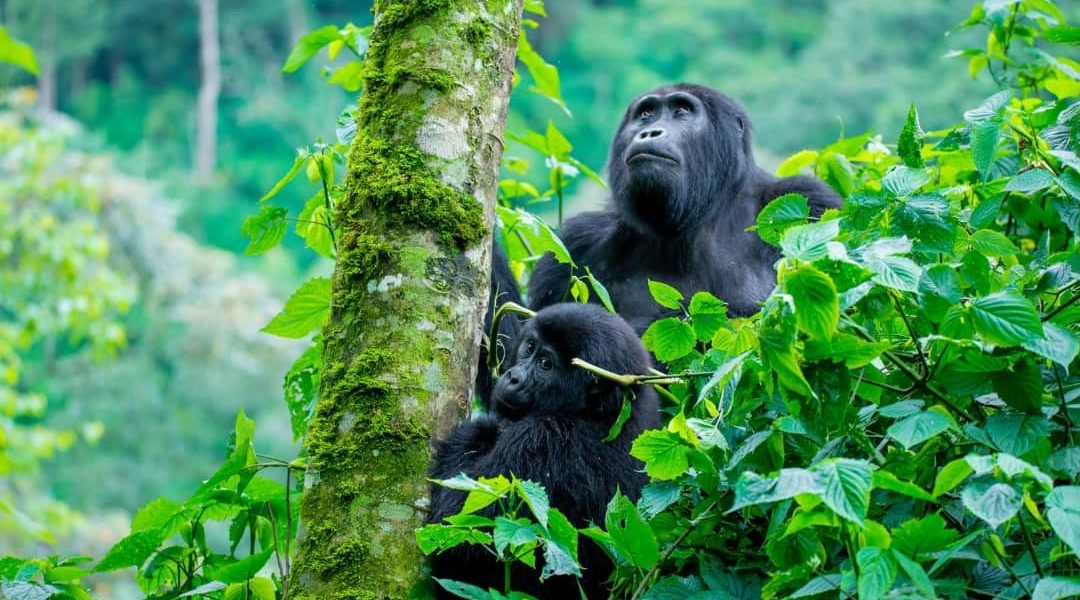
A photography safari does not have to mean sacrificing comfort.
The Volcanoes National Park region contains excellent high-end accommodation suitable for photographers looking for privacy, premium dining, spacious rooms and convenient access to the trekking area.
Luxury accommodation can be especially worthwhile for photographers undertaking multiple gorilla treks. After several hours of forest trekking, having a comfortable room, quality meals, laundry services and relaxing lodge surroundings can significantly improve the experience.
A premium Gorilla Photography Safari Rwanda can also include a private safari vehicle from Kigali, personalised airport transfers and extra luggage space for camera cases.
The objective is not simply luxury for its own sake. Smooth logistics give photographers more time and energy to concentrate on their work.
Combining Gorilla Photography With Golden Monkeys
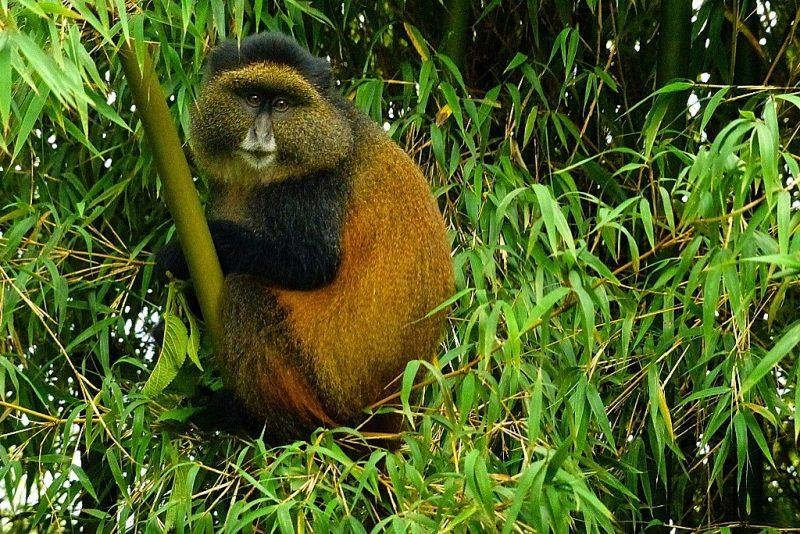
Photographers spending additional time around Volcanoes National Park can complement their gorilla portfolio with golden monkey photography.
Golden monkeys occur in the Volcanoes region and provide a very different photographic challenge. They can be faster and more active than gorillas, demanding quicker reactions and careful attention to autofocus and shutter speed. Rwanda identifies two groups available for tracking in Volcanoes National Park, including groups associated with the slopes of Karisimbi and the bamboo forest around Sabyinyo.
Their golden-orange colouration against green bamboo can produce striking images and adds valuable variety to a Rwanda primate photography portfolio.
Combining Gorilla Photography With Akagera National Park
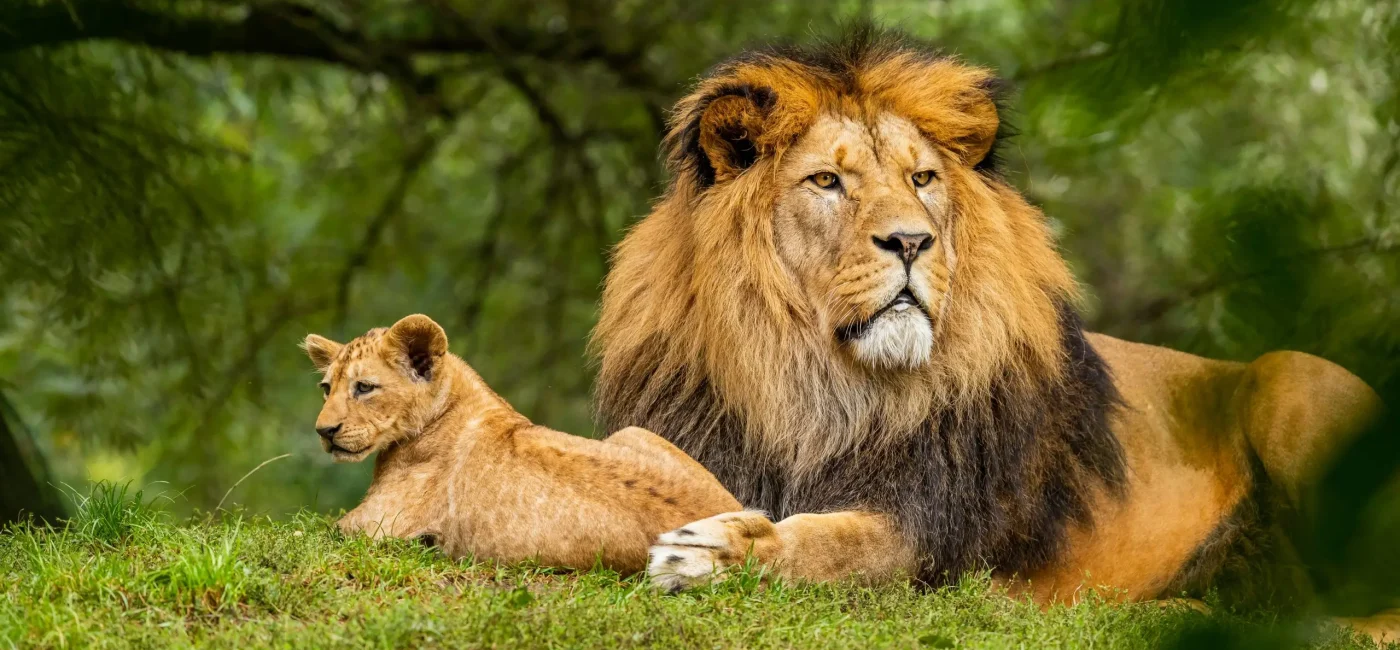
For photographers who want a broader Rwanda wildlife portfolio, Akagera National Park can be added before or after Volcanoes National Park.
The photographic experience changes completely from dense rainforest to open savannah, woodland, lakes and wetlands. This allows photographers to work with elephants, giraffes, buffaloes, antelopes, predators, birdlife and broader landscape compositions.
Combining Akagera with Volcanoes National Park creates a particularly strong photography itinerary because photographers return home with both intimate primate imagery and classic African safari photographs.
Kigali Photography Before or After Gorilla Trekking
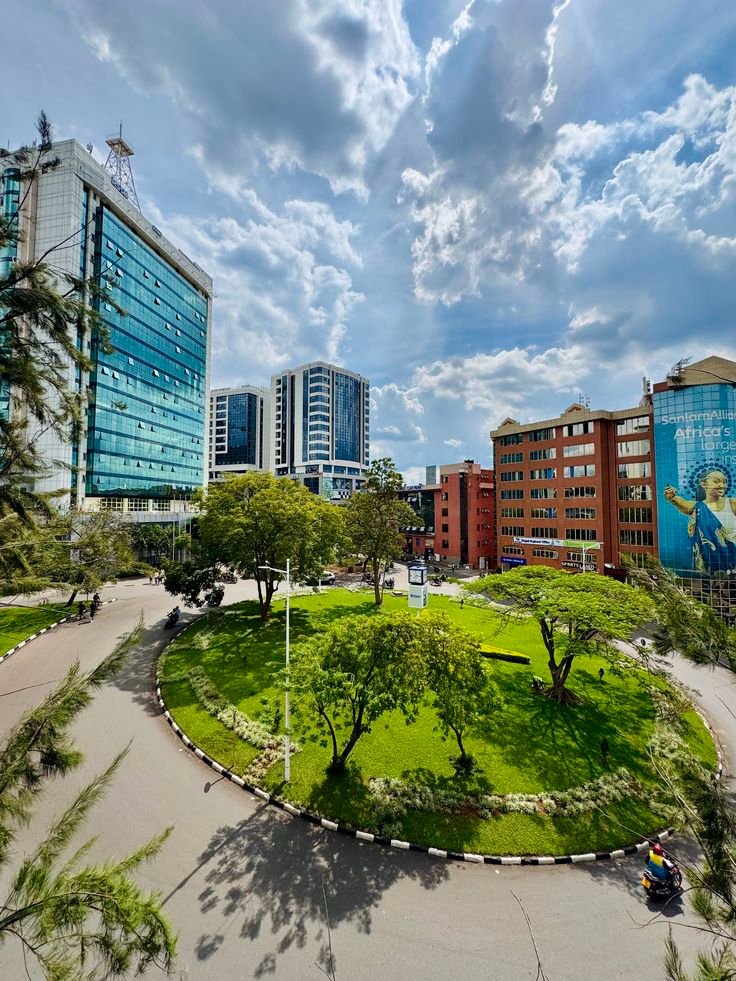
Kigali can add a human and cultural element to a Rwanda photography journey.
Rather than treating the capital simply as an airport gateway, photographers can spend time capturing street scenes, architecture, markets, cafés, art spaces and the city’s distinctive hilly landscape.
Responsible street photography is important. Photographers should always respect personal privacy and ask permission when appropriate, especially when taking close portraits.
Adding Kigali imagery can help tell a more complete story about Rwanda rather than presenting the country solely through wildlife.
How Many Days Do You Need for a Gorilla Photography Safari Rwanda?
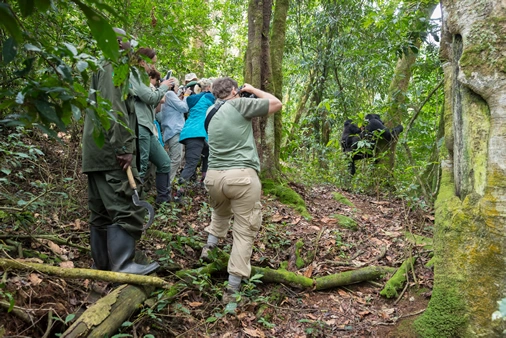
A short Gorilla Photography Safari Rwanda can be completed within two or three days, particularly for travellers arriving through Kigali and undertaking one gorilla trek.
Photographers, however, often benefit from additional time.
A three-day itinerary might include arrival or transfer to Volcanoes National Park, one gorilla trek and return to Kigali. Four days create space for a second primate activity or a more relaxed schedule.
A five-day Gorilla Photography Safari Rwanda can include two gorilla treks, scenic photography, golden monkeys or cultural photography around the Volcanoes region.
Photographers wanting a comprehensive Rwanda portfolio can extend the journey to seven or more days and incorporate Akagera National Park, Kigali, Lake Kivu or Nyungwe National Park.
Booking Gorilla Permits for Gorilla Photography Safari Rwanda
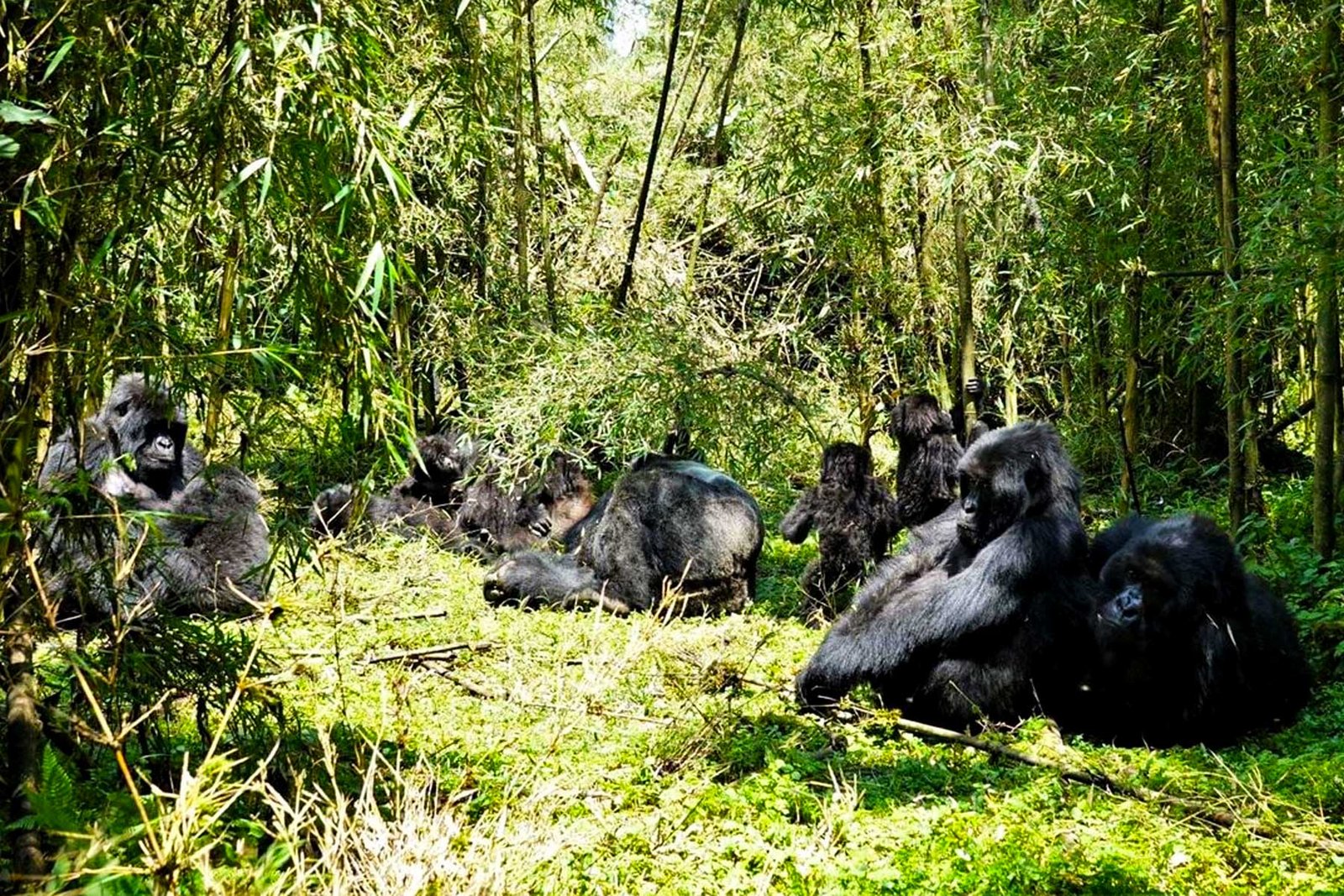
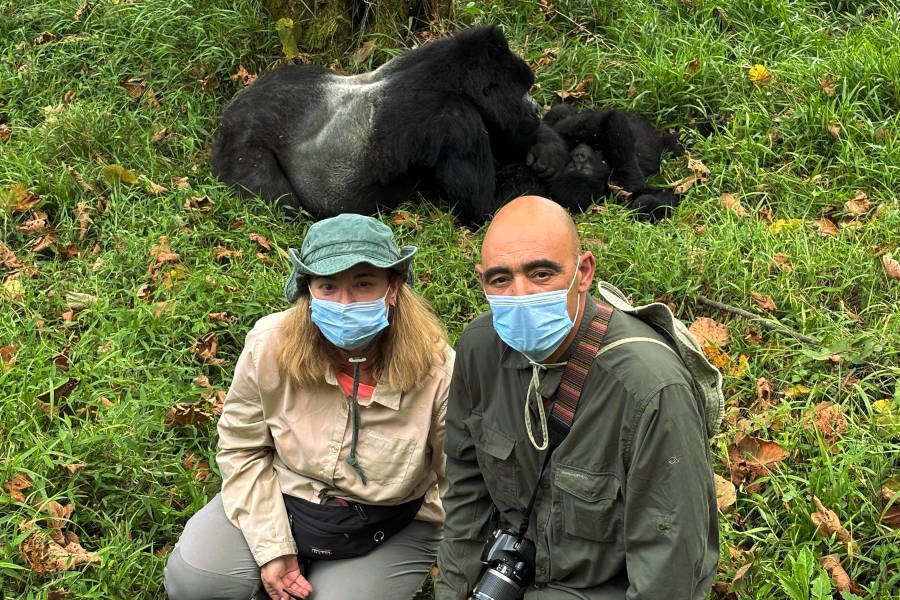
Gorilla Photography Safari Rwanda does not require a separate standard gorilla photography permit under the ordinary trekking experience. Every participant requires the applicable gorilla trekking permit for the date of the visit.
Rwanda currently lists the standard permit at US$1,500 per person per day and recommends booking well in advance because daily availability is limited. Official information states that only 96 permits are available per day across the habituated gorilla groups.
Photographers travelling during popular periods should therefore avoid confirming international flights and non-refundable accommodation without considering permit availability.
For multiple trekking days, each day must be reserved separately.
Frequently Asked Questions About Gorilla Photography Safari Rwanda
Is Rwanda good for gorilla photography?
Yes. Rwanda is one of the world’s leading destinations for photographing mountain gorillas in their natural habitat. Volcanoes National Park protects a section of the Virunga Massif and provides controlled visits to habituated gorilla families accompanied by professional trackers and guides.
How much is a gorilla photography permit in Rwanda?
For a normal gorilla trekking and photography experience, the current standard international gorilla permit is US$1,500 per person per trek. You need a separate permit for every trekking day.
How long can photographers stay with the gorillas?
Once the assigned gorilla family is located, visitors normally spend a maximum of one hour with the gorillas. Because photography time is limited, cameras should be prepared before reaching the family.
What is the best lens for gorilla photography in Rwanda?
A versatile medium telephoto zoom is particularly useful because photographers may encounter gorillas at varying distances. A 70–200mm-style range is popular for portraits and behaviour, while longer zooms can help with tighter images from farther away. A wider lens is useful for environmental photographs showing gorillas within the rainforest.
Can I use flash when photographing gorillas?
Flash should not be used when photographing mountain gorillas. Photographers should disable automatic flash before approaching the animals and follow all instructions provided by park guides during the pre-trek briefing.
What is the minimum age for a Gorilla Photography Safari Rwanda?
The minimum age for gorilla trekking in Rwanda is currently 15 years. The same age restriction therefore applies to visitors joining a standard gorilla trek primarily for photography.
Do I need professional camera equipment?
No. Professional equipment is not mandatory. A photographer who understands a familiar camera can produce excellent photographs. Good autofocus, reasonable low-light performance and a versatile lens are more important than carrying the most expensive possible system.
Should I take two cameras into the forest?
Two camera bodies can be useful for experienced photographers because they allow different lenses to remain mounted and reduce lens changing in humid forest conditions. However, the additional weight must be considered. Photographers who prefer travelling light can produce excellent results with one body and a versatile zoom.
Should I hire a porter for gorilla photography?
Yes, particularly when carrying heavy camera equipment. Rwanda confirms that porters are available to help carry backpacks and cameras and provide assistance along the trekking route. Using a porter allows photographers to conserve energy for the encounter itself.
Is one gorilla trek enough for photography?
One trek can produce remarkable photographs, but serious photographers often benefit from two or more encounters. Different days can provide different gorilla families, weather conditions, forest backgrounds, behaviour and lighting opportunities.
What happens if it rains during the gorilla trek?
Rain is always possible in a mountain rainforest environment. Photographers should carry waterproof protection for themselves and their equipment. Rwanda’s official guidance recommends lightweight waterproof clothing along with strong walking shoes and sturdy clothing.
What time does gorilla trekking begin in Rwanda?
Visitors normally gather at the Volcanoes National Park headquarters in Kinigi at approximately 7:00 a.m. for allocation and briefing before proceeding to their assigned trailheads.
Can beginners join a Gorilla Photography Safari Rwanda?
Absolutely. You do not have to be a professional wildlife photographer. A photography-focused safari can be designed for beginners, enthusiasts and professionals. Beginners benefit from learning basic exposure, autofocus and shutter-speed settings before reaching the gorillas.
Can I combine gorilla photography with other wildlife?
Yes. Akagera National Park can be added for classic savannah wildlife photography, while golden monkey tracking around Volcanoes National Park provides additional primate photography. Nyungwe can also be considered on a longer Gorilla Photography Safari Rwanda.
When should I book my Rwanda gorilla photography safari?
Booking several months ahead is sensible, particularly if you require specific dates or want multiple consecutive gorilla treks. Rwanda limits the number of trekking permits available each day and officially recommends advance reservations.
Book Your Gorilla Photography Safari Rwanda
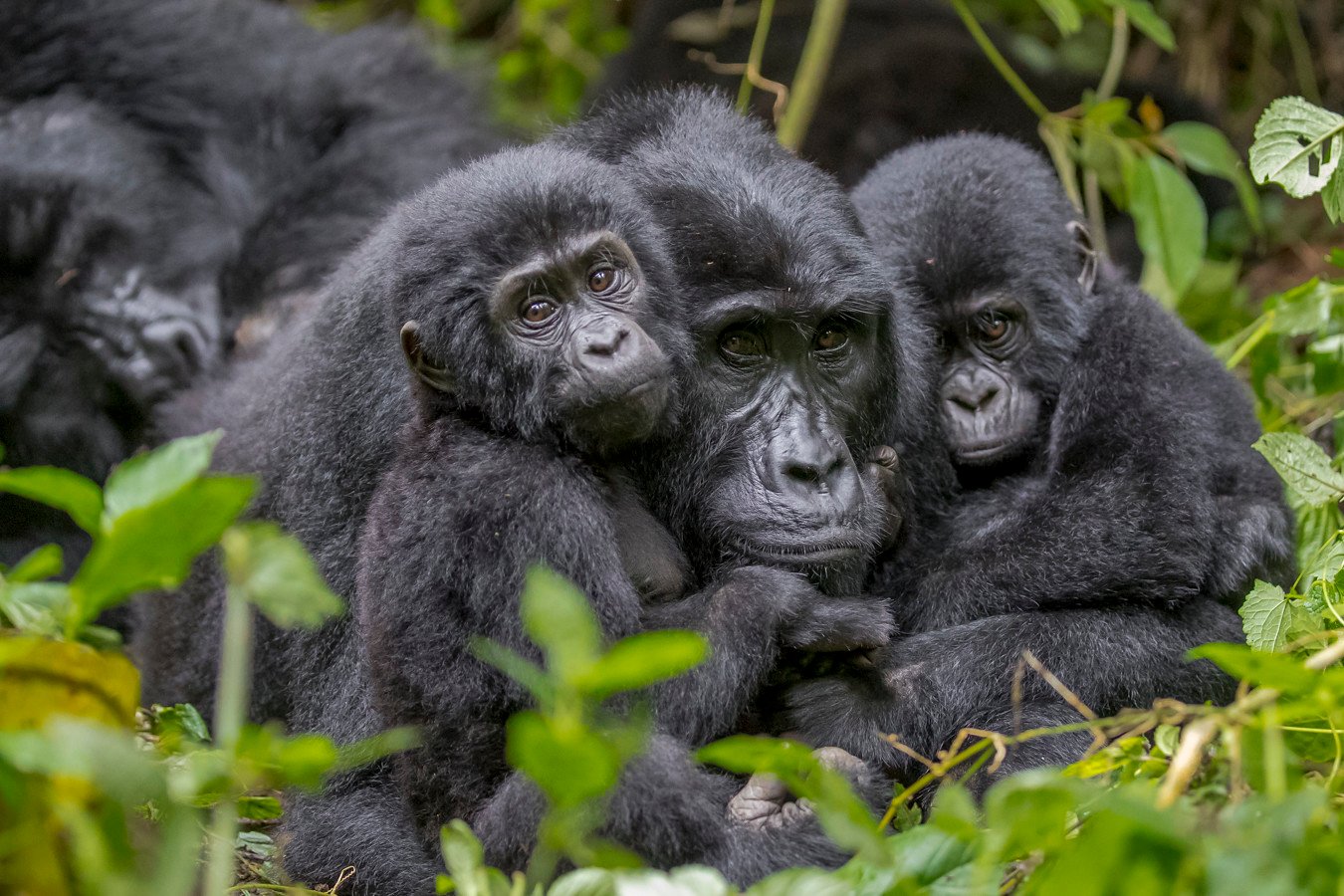
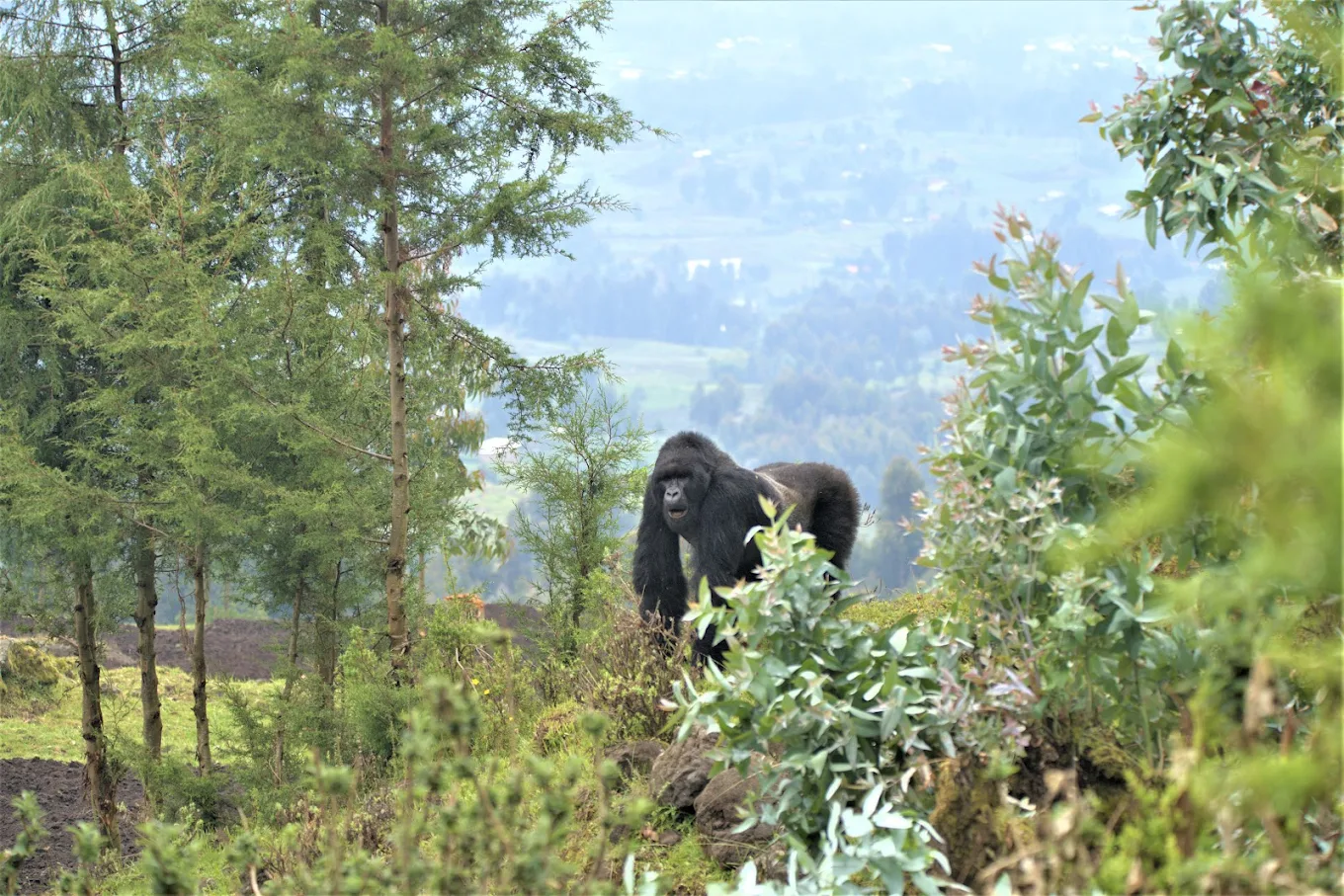
A Gorilla Photography Safari Rwanda is more than an opportunity to return home with beautiful pictures. It places photographers inside one of Africa’s most compelling natural environments, surrounded by bamboo forests, volcanic mountains and one of humanity’s closest wild relatives.
Every encounter is different. A silverback may sit quietly in the vegetation while watching his family. An infant may climb over its mother. Juveniles may suddenly begin playing. Mist may drift between the bamboo stems, or soft morning light may reveal remarkable detail in a gorilla’s face.
These are moments that cannot be staged, repeated or guaranteed.
Careful preparation allows photographers to make the most of them. Selecting suitable lenses, carrying weather protection, understanding camera settings, using a porter, booking permits early and allowing enough time for multiple treks can dramatically improve the experience.
Whether you are a professional wildlife photographer building a portfolio, an enthusiastic hobby photographer searching for an extraordinary subject or a traveller who simply wants exceptional photographs of mountain gorillas, a carefully designed Gorilla Photography Safari Rwanda can combine photographic opportunity, adventure, responsible tourism and unforgettable wildlife encounters in the magnificent forests of Volcanoes National Park.